
Tata Motors and Iveco Group join forces with €21 billion combined revenue
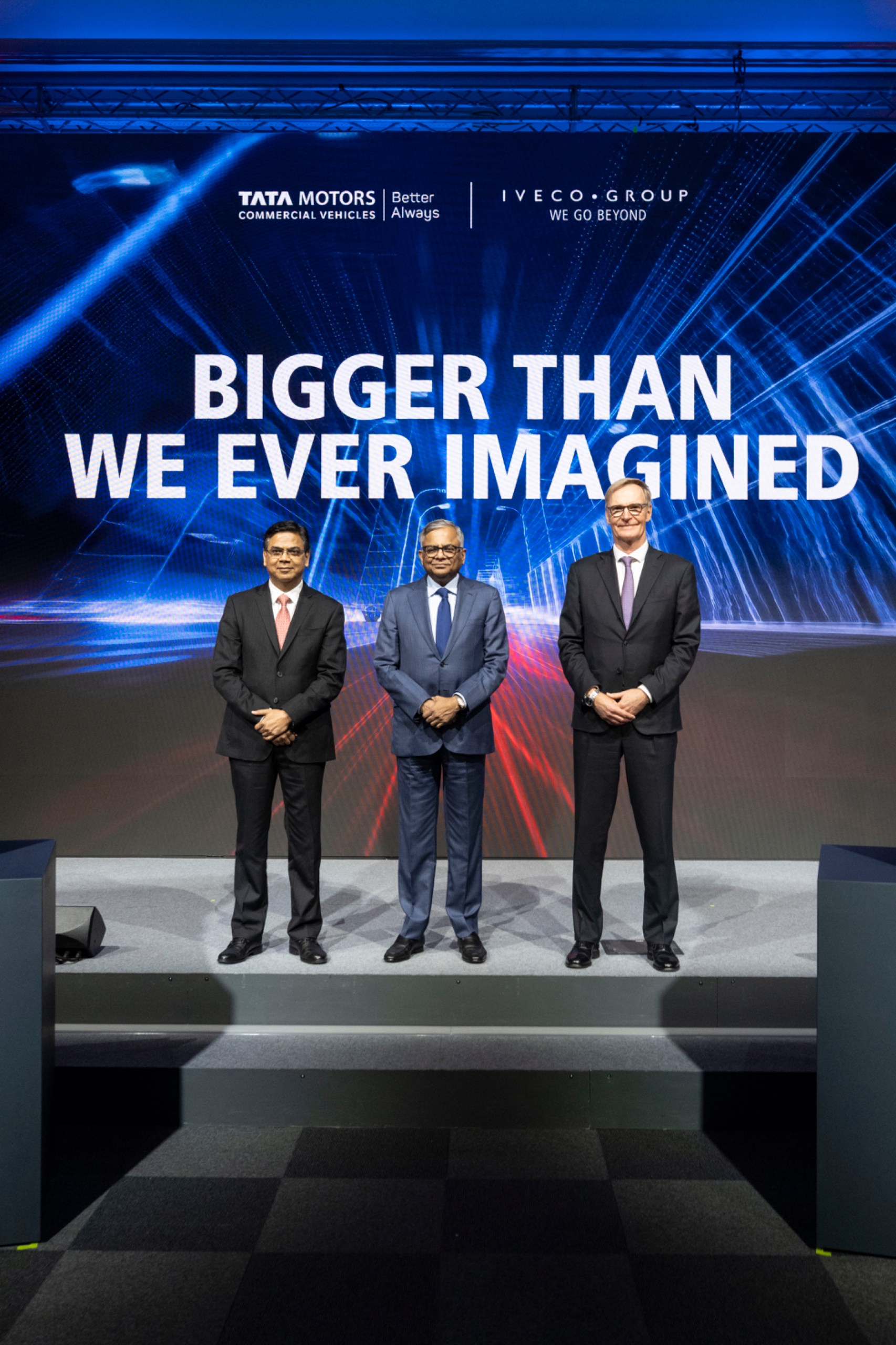
Tata Motors and Iveco Group have announced a combination creating the world’s fourth-largest commercial vehicle manufacturer, according to the companies. Presented in Turin on 3 November 2026, the new entity spans more than 130 countries, with combined revenue of approximately €21 billion and sales volumes of around 590,000 vehicles.
The industrial footprint is substantial: 27 manufacturing sites, 25 R&D centres and approximately 9,300 sales and service outlets. Together, the businesses employ more than 73,000 people across six continents.
For construction-sector professionals, the portfolio extends beyond road transport. Tata Motors brings goods vehicles ranging from less than 1 tonne to 55 tonnes. Iveco Group adds light commercial vehicles and medium- and heavy-duty trucks, while FPT contributes powertrains for on-road, off-road, marine and power-generation applications.
There is no single-track approach to propulsion. Combined expertise covers conventional combustion engines, natural gas, battery-electric systems and hydrogen, alongside other emerging low- and zero-tailpipe-emission technologies. The manufacturers intend to share engineering, software and connected-technology capabilities to accelerate development and deployment.
Geographically, Tata Motors’ strengths in India and emerging markets complement Iveco Group’s positions in Europe and Latin America. The companies aim to use that broader reach, together with purchasing and distribution capabilities, to bring innovations to market faster and more competitively.
Iveco Group will retain its Turin headquarters, while its brands, teams and industrial operations preserve their identities. Tata Motors will support Iveco Group’s existing strategy and investment plans; the announcement provides no new investment figure.
For fleet operators and dealers, continuity is the immediate commitment: existing customer contracts, warranties, aftersales obligations, supplier relationships and financing arrangements through the manufacturers’ financial subsidiaries remain unchanged, supported by the same teams and networks.


